
Do You Need a Perc Test for a Septic Permit in South Carolina?
No, South Carolina’s state septic program stopped using perc tests in the late 1970s. Today the South Carolina Department of Environmental Services (SCDES, formerly DHEC) runs a site and soil evaluation instead. The fee is $150, set by state Regulation 61-56.
If the lot passes, you get a Permit to Construct that is good for five years. Every new system needs that permit before septic system installation can start.
The state dropped the perc test because it was not very accurate. A site can pass in a dry season and fail in a rainy stretch, when the water table sits higher.
What does the SCDES soil evaluation check?
The inspector takes at least two soil borings where the system will likely go. Soil color shows how high the water table rises in the wettest season, and it can be read year-round. Texture shows how fast water moves through the soil. Clay soil needs a much bigger drain field than sandy soil.
Bedrooms set the size. SCDES figures 120 gallons of wastewater a day per bedroom. A three-bedroom home is sized for about 360 gallons a day. The lot also needs a repair area half the size of the drain field.
Under Section 200.6 of Regulation 61-56, no part of the system except solid pipe can sit closer than these setbacks:
| The system must stay this far from | Minimum distance |
|---|---|
| A building | 5 feet |
| A property line | 5 feet |
| A drainage ditch | 25 feet |
| A private well | 75 feet |
| A lake, stream, canal or pond | 75 feet from the high-water line |
| A public well | 100 feet |
| A driveway or parking area | Never under one |
Lots above the Fall Line need backhoe pits for the evaluation. Clarendon County sits in the middle of the Coastal Plain, below that line, where SCDES says pits are not required.
What are the steps to a septic permit in South Carolina?
- Check for sewer. SCDES cannot permit a septic system where public sewer is accessible. Ask your county or town first.
- Apply online. File Form D-1740 through the SCDES ePermitting portal, with a copy of the plat or deed. The $150 fee is paid there too.
- Prep the lot and wait. Applications are handled first come, first served, from the day you activate yours.
- Get the Permit to Construct. If the lot passes, the inspector issues it.
- Install and inspect. A licensed installer builds the system to the permit, and SCDES inspects it before it is covered.
Without the septic permit, SCDES says, the county cannot issue a building permit on a lot with no sewer. After you apply, questions go to the SCDES regional office; Clarendon, Sumter, Kershaw and Lee counties use the Sumter office.
What should you have ready before the inspector comes?
Regulation 61-56 and a Clemson Extension fact sheet list what to do before the site visit:
- A plat or deed showing the lot size, with boundary lengths for lots of two acres or less.
- A permission letter from the property owner, so SCDES staff can come onto the land.
- Your planned bedroom count. SCDES warns that undercounting sets the system up to fail.
- Property lines and corners cleared and marked, with a marker at the front center of the lot.
- Stakes at the corners of the planned house; flags help.
- Marks for the tank, the sewer stub-out and the drain field area.
- The location of any well, plus a site sketch of other planned buildings.
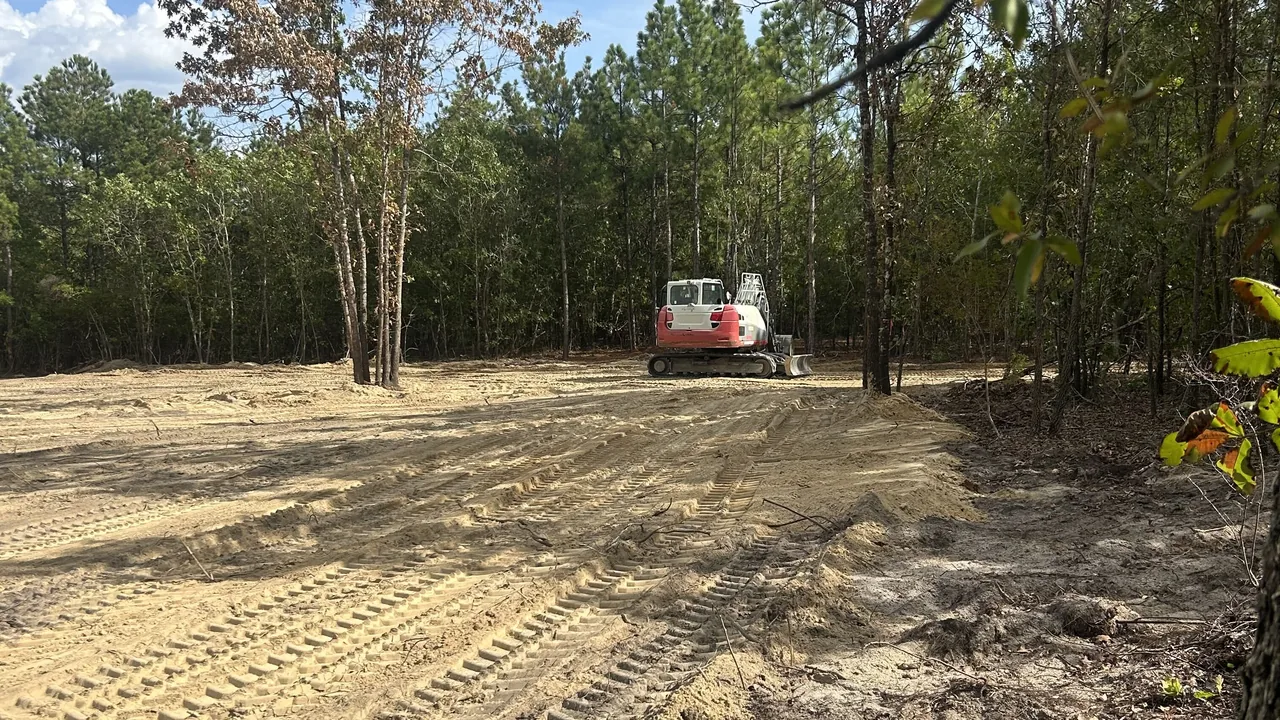
SCDES can also ask you to clear underbrush so the inspector can get around. On a wooded lot, that can mean lot clearing before the site visit.
How much does a septic permit cost, and how long does it take?
The SCDES fee is $150 to evaluate the site, set in Section 102.2 of Regulation 61-56. Renewing after five years, or changing the permit, means a new application and the fee again.
SCDES’s septic pages do not promise a set number of days. Wet weather can add time, since soil that is too wet may have to dry out first.
You can also hire a Professional Soil Classifier to do the soil work and send the report with your application. SCDES says this may cut processing time, depending on staff. The classifier bills you separately.
What happens if your lot fails the soil evaluation?
A failed lot may still have options. The inspector may check other spots and talk through alternatives with you.
SCDES then points you to a Professional Soil Classifier, who can work with an engineer on a specialized design. SCDES calls this the 610 standard and warns it can cost thousands of dollars more than a conventional system. It may also need bigger setbacks.
SCDES also weighs alternative systems case by case, and they need more upkeep. Some lots cannot take a septic system at all, and soil can limit how many bedrooms a house may have.
The systems we install are conventional, so a lot headed for an engineered design starts with the engineer. Still shopping for land? SCDES flags flooding, standing water, wetlands and fill dirt as warning signs.
How is a manufactured home lot different?
The permit is the same, but the order of work matters more. Under Regulation 61-56, a mobile or modular home cannot move onto the site until the septic permit is issued.
Clarendon County’s setup permit asks for the SCDES Permit to Construct and Approval to Operate on a new system. There, an existing system needs an inspection letter from a licensed septic installer, dated within the past year.
Placement matters on a tight lot. No part of the system can sit within 5 feet of the home or under a driveway or parking area. Plan the pad and the drive around it. Our mobile home septic systems page covers the order of work with the dealer.
How do subdivisions and large systems differ?
SCDES will not do the soil evaluation or the layout for a subdivision of ten or more lots. A Professional Soil Classifier does the soil work, and the layout comes from an engineer or that same classifier.
Systems over 1,500 gallons a day need an engineer’s design and a pre-application meeting with SCDES. The seasonal water table must sit at least 36 inches below the natural ground. A repair area half the system’s size is required. One system that serves more than one deeded lot counts as a community system and needs a full-size repair area.
For small subdivisions and businesses on septic, see commercial septic systems.
What comes after the permit is issued?
With the permit in hand, a licensed installer builds the system to match it. The installer books a final inspection with SCDES before anything is covered. If the inspector is more than 30 minutes late, SCDES lets a licensed installer self-inspect.
Once the paperwork checks out, SCDES issues the Approval to Operate. The permit then stays in effect for the life of the system.
That install is our part of the job, on lots around Summerton and the east side of the state. We look at the lot and put a free estimate in writing. Then we set the tank and the drain field the permit calls for. See new septic systems around Summerton, or call or text (803) 478-2620.